Berkeleyans can help keep more out of the landfill by sorting compost and recycling into the right bins.
Use our waste-sorting guide to figure out where thousands of household items should go, whether it's in compost, recycling, landfill, or another waste service.
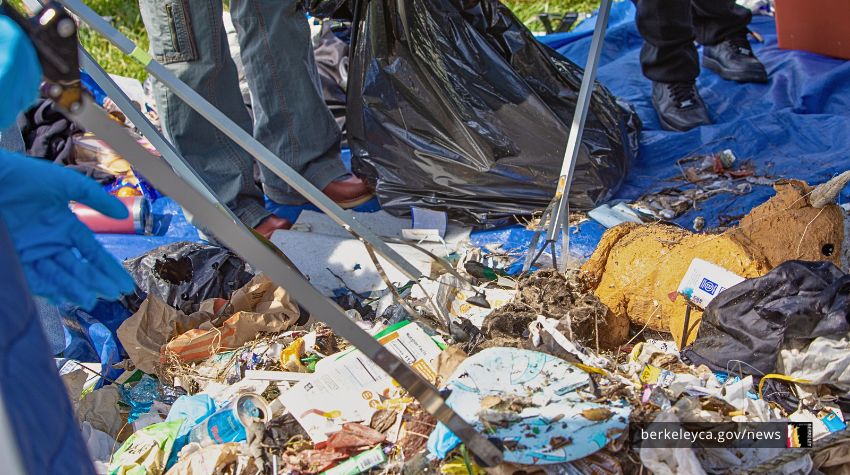
When you sort your waste the right way, more food scraps, paper, bottles, and other recyclables can actually get reused. Less landfill waste ends up in compost and recycling.
In particular, keep food out of landfills. In addition to the volume it adds, decaying food creates methane – a powerful greenhouse gas. In Berkeley, food scraps, coffee grounds, pizza boxes and uncoated paper plates, bowls, and napkins can all go in your green compost bin. Food containers of flimsy plastic or lined paper – like milk cartons – should go into your gray trash bin.
Even small changes at home can keep good materials out of the landfill and help save resources. Right now, Berkeley keeps over 77 percent of its waste out of landfills. The goal is to reach 90 percent by 2030.
Before you toss something into the grey trash bin, check the Waste Sorting Guide. You’ll find options for reuse, recycling, donation, and disposal for thousands of items.
Use the Waste Sorting Guide to sort your items
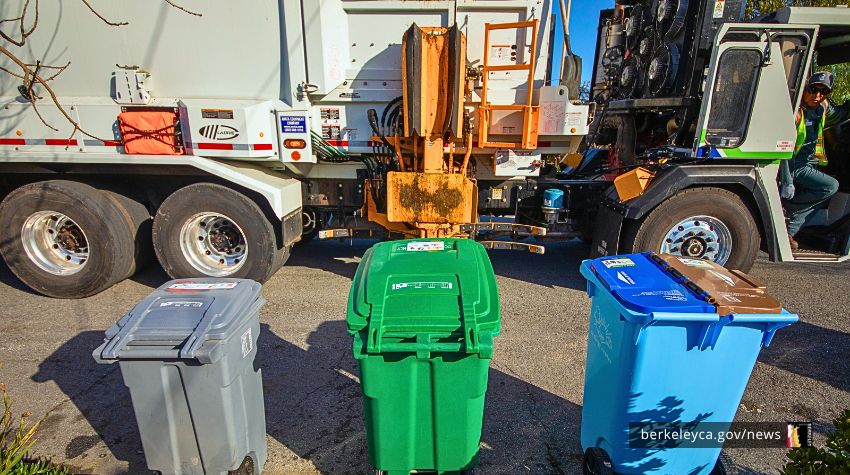
Each household gets three bins: blue for recycling, green for compost, and grey for trash.
- Green compost bin: Food scraps, food-soiled paper, yard trimmings, and BPI-certified compostable paper bowls, plates, cups, bags, and food boxes.
- Blue recycling bin: Clean paper and cardboard on one side; empty glass, metal, foil, and hard plastic containers on the other.
- Gray landfill bin: Only things that cannot be composted or recycled, including lined paper food cartons.
Some things don’t belong in your curbside bins, but the City has you covered. Take construction debris and large items to the Transfer Station. Drop off household hazardous waste and electronics at special collection sites. See the Waste Sorting Guide to get details on those items and more.
Sorting your waste the right way really does make a difference
When you sort food scraps, yard waste, clean paper, bottles, cans, and other recyclables properly, they can often be recovered and reused. If there’s too much of the wrong stuff mixed in, the whole load might end up in the landfill.
Sorting your waste correctly also helps protect workers who sort recyclables by hand and improves the quality of compost and recyclables collected in Berkeley.
Every bin that’s sorted correctly into green, blue and grey bins helps us get closer and cuts down on methane from food and yard waste in landfills.
Read more about properly sorting your compost, recycling, and trash
Get trusted information about the City of Berkeley by bookmarking berkeleyca.gov, subscribing to our newsletter, and following us on Bluesky and Instagram.
Media Contact